


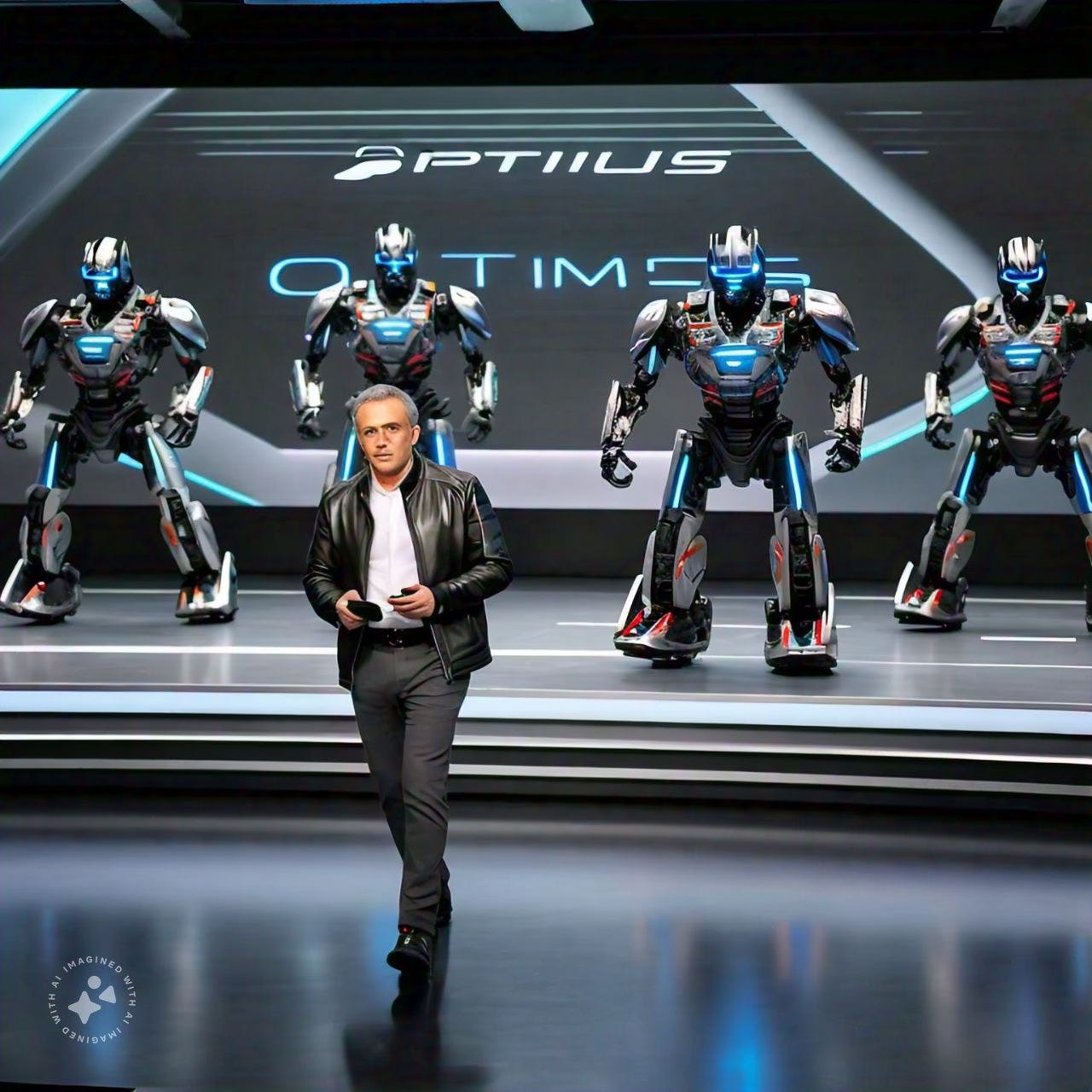
Two years ago, Tesla's Optimus prototype was an underwhelming mess of exposed wires that could only operate in a carefully controlled stage presentation. Last night, Tesla's "We, Robot" event featured much more advanced Optimus prototypes that could walk around without tethers and interact directly with partygoers.
It was an impressive demonstration of the advancement of a technology Tesla's Elon Musk said he thinks "will be the biggest product ever of any kind" (way to set reasonable expectations, there). But the live demos have also set off a firestorm of discussion over just how autonomous these Optimus robots currently are.
A robot in every garage
Before the human/robot party could get started, Musk introduced the humanoid Optimus robots as a logical extension of some of the technology that Tesla uses in its cars, from batteries and motors to software. "It's just a robot with arms and legs instead of a robot with wheels," Musk said breezily, easily underselling the huge differences between human-like movements and a car's much more limited input options.
More about the skepticism surrounding Tesla’s Optimus robots
Writer CEO May Habib Talks Utilizing Synthetic Data to Train AI Models
May Habib, Writer CEO, joins 'Closing Bell Overtime' to talk the companies new AI model and how they are innovating AI training.
Nvidia-Backed CoreWeave Gets $650 Million Credit Line From Wall Street Banks
CoreWeave, an Nvidia-backed artificial intelligence startup that rents out chips to other companies, announced Friday that it has a new $650 million credit line to expand its business and data center portfolio. The cloud infrastructure company said it’s raised $12.7 billion from equity and debt investors in the past 18 months, including a $1.1 billion round in May at a $19 billion valuation.
By the end of 2024, CoreWeave plans to have 28 data centers across the U.S. and abroad — including locations in Austin, Texas, Chicago, Las Vegas and London — and it plans to build another 10 data centers in 2025. In the past, CoreWeave has supplied Microsoft and French AI startup Mistral with graphics processing units, or GPUs. As of last year, CoreWeave reportedly had $2 billion in revenue under contract lined up for 2024.
Read more about CoreWeave’s AI chip rental business
IA Summit 2024 Fireside Chat With Mustafa Suleyman: From SaaS to Agents
AI is evolving faster than we can predict, and no one has a clearer view of what’s coming than Mustafa Suleyman, the CEO of Microsoft AI.
In his candid fireside chat with Madrona Managing Director Soma Somaseger during the 2024 IA Summit, Mustafa shared a bold vision for how personal AI assistants will soon transform the way we live, work, and interact with technology.
He doesn’t just talk about tools or models — he redefines AI as a deeply personal relationship, one that adapts, learns, and even anticipates our needs in ways we haven’t yet imagined.
From Boom To Balance With Gen AI
Just two years ago, the arrival of ChatGPT sent ripples through the technological landscape, stirring visions of the internet's disruptive dawn in the early 2000s.
By April 2023, Goldman Sachs was heralding GenAI's potential in an exuberant piece titled "Generative AI Could Raise Global GDP by 7%." Bank of America echoed this optimism, forecasting a staggering $15.7 trillion stimulus from GenAI by 2030. Startups rode this wave of enthusiasm: within a year of its inception, France’s Mistral AI was valued at $6.6 billion, while its American rival, Anthropic, soared to $15.6 billion.
Yet, as swiftly as the optimism surged, skepticism has begun to surface. In June, Goldman Sachs, in a shift of tone, published "GenAI: Too Much Spend, Too Little Benefit." Tech research firm Gartner painted a cautious picture, predicting that 30% of ongoing GenAI projects within enterprises would falter by the next year.
In the United States, seed investments in AI startups plummeted by 76% from the last quarter of 2023 to the first quarter of 2024. The initial exuberance had inflated a bubble: 75 GenAI startups were valued above $100 million, yet fewer than 25 were generating more than $10 million in revenue.
More about GenAI not being a fleeting trend on Forbes
Bold AI Predictions From Cohere’s Co-Founder, Ivan Zhang
Ivan Zhang, co-founder of Cohere, discusses the company's enterprise-focused AI solutions. He explains Cohere's early emphasis on embedding technology and training models for secure environments.
Zhang highlights their implementation of Retrieval-Augmented Generation in healthcare, significantly reducing doctor preparation time. He explores the shift from monolithic AI models to heterogeneous systems and the importance of improving various AI system components.
Zhang shares insights on using synthetic data to teach models reasoning, the democratization of software development through AI, and how his gaming skills transfer to running an AI company.
He advises young developers to fully embrace AI technologies and offers perspectives on AI reliability, potential risks, and future model architectures.
‘I’ve never been more excited about anything’: Why Marc Benioff is all in on AI
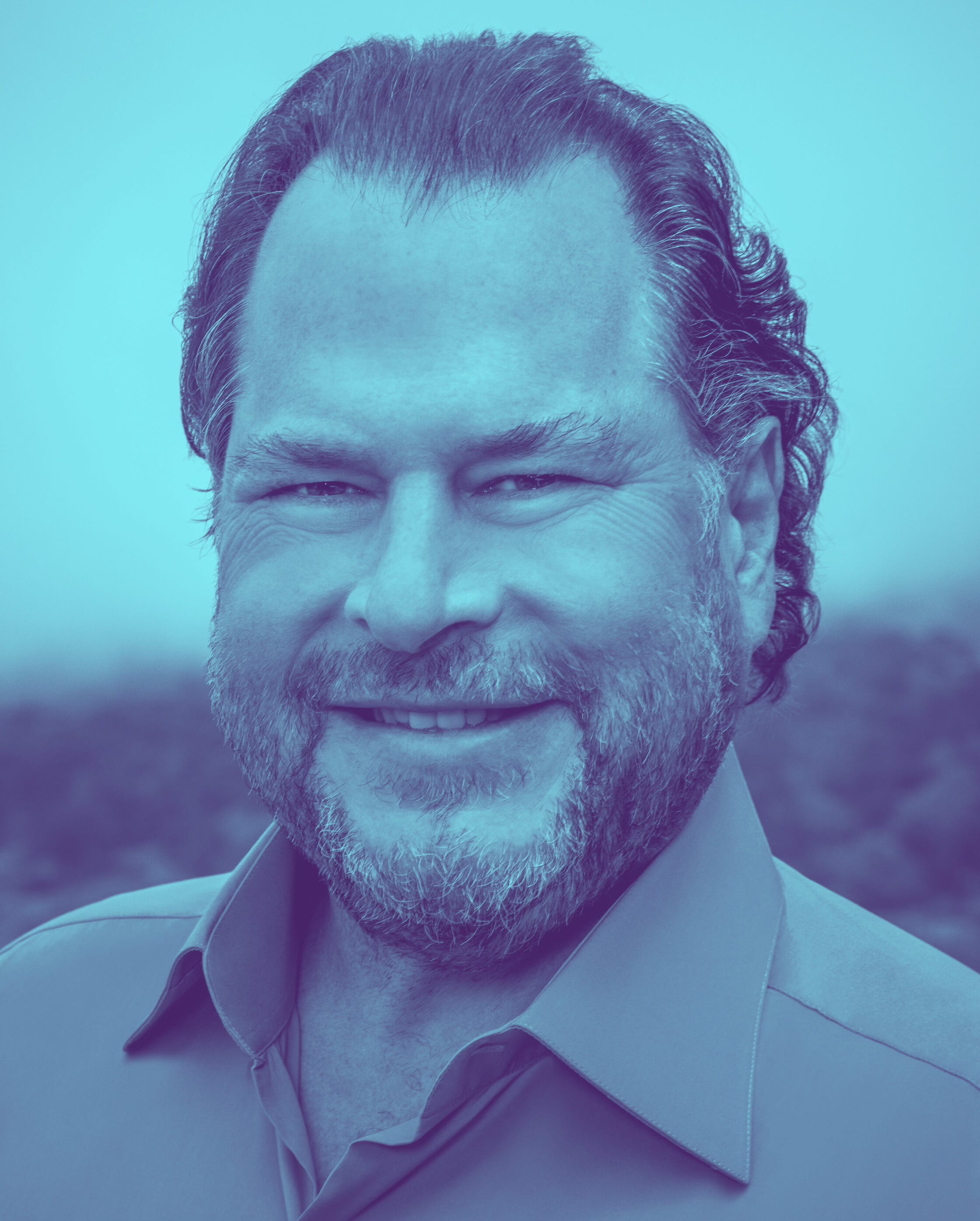
Salesforce CEO Marc Benioff says that Microsoft has done the AI industry a “tremendous disservice” by overhyping the capabilities of products like Copilot. Benioff argues that Agentforce, Salesforce’s new fleet of AI tools, is “what AI was meant to be.”
Benioff has never been more excited in his career, confident that Agentforce will deliver a transformation on par with the cloud, mobile, social revolutions of the past. This is an abridged transcript of an interview from Rapid Response, hosted by Bob Safian, a former editor-in-chief of Fast Company.
Safian: You’re coming off another Dreamforce, which, for those who aren’t familiar, is Salesforce’s annual gathering. I always think of it as somewhere between a business conference, an urban festival, and like a revival meeting. Are there any evocative moments for you personally from this year’s event?
Benioff: Well, it was amazing. It was probably not only our best Dreamforce ever, but also our most important. Forty-five thousand people came to San Francisco. It was three amazing days. Incredible show with 1,500 sessions. About 20 million or 50 million people joined us online as well. We’re doing a dozen or two dozen world tours over the next month or two because the message is so important. It wasn’t just our largest and best Dreamforce, but by far it was our most important Dreamforce.
Read or listen to this interview with Salesforce CEO Marc Benioff
The Era of Unbounded Products: Designing for Multimodal IO: Ben Hylak
Everything is converging. ai models can now natively understand the same modalities as you. at the same time, AR technology is getting to a place where we are able to experience virtual worlds like never before. How did we get here, where is this going, and how do we build intuitive experiences in the age of unbounded products.
Thats all for today, however new advancements, investments, and partnerships are happening as you read this. Subscribe today, so you don’t miss any AI related news.